

How Is Zero Mission Different From Metroid
A game like the original Metroid tin can exist difficult to play without putting yourself in the correct state of listen. It is very much a game of its era, which is not to say that Metroid has aged poorly, but its approach to game design is no longer contemporary. Metroid is an exploration-based video game where y'all have no map, no sense of management, and cipher in the manner of "quality of life." Samus starts with 30 Health every time you lot Game Over, checkpoints are scarce enough to hardly matter, and repeating backgrounds all but guarantee you were getting lost on the regular. All of this adds to Metroid'south uniquely oppressive atmosphere, making it ane of Nintendo'south least accessible NES games.
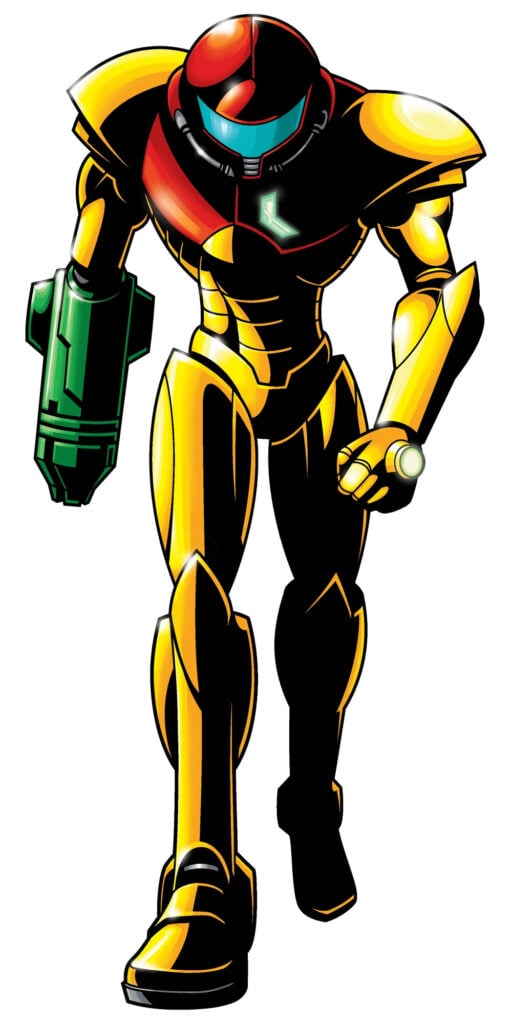
Released eighteen years later the 1986 original, Metroid: Zero Mission is i of the finest remakes in the medium and a prime instance of how you tin can reimagine a game while still respecting it on a fundamental level. Nothing Mission keeps the best qualities of the original Metroid, reinterprets the worst, and rounds out the edges by taking cues from both Super Metroid and Metroid Fusion. In that respect, Nada Mission feels just as much like a remake equally it does an evolution of the serial thus far. Nil Mission turns the least accessible Metroid into the nearly attainable.
This, in a way, goes confronting the spirit of the original, but Zero Mission finds intelligent ways of modernizing its source textile while never straying far enough to go unrecognizable. Level design is equally true-blue as tin be without translating Metroid I'due south nuisances. Zebes' full general layout stays the same but is profoundly expanded upon. Upgrades and bosses are exactly where they were in the NES original. Repeated settings and dead ends are replaced with some of the nigh creative rooms in the series. Added shortcuts connect major areas, and in that location are even new maps to expand the hazard.
Zip Mission's delineation of Zebes is steeped in two layers of homage. Super Metroid references are abundant, but they were Metroid I references, to begin with. An active effort is fabricated to ensure consistency between Samus' two adventures. Niggling details linking to Super lend a passage of time to the planet — vibrant backdrops and a peaceful skyline arrive clear that this is a younger Zebes. Visuals are distinct plenty to prevent the setting from coming off as derivative. Zero Mission is atmospherically more than colorful and energetic than Super. Samus is in a dangerous setting, but she has the means to fight back. Zebes is livelier cheers to a greater enemy and visual variety. You can notwithstanding go the classic Metroid hostility past playing on Hard Mode, merely difficulty no longer stems from the birdbrained level design.

Brinstar and Norfair take notable cues from Super while remaining wholly unique. The Brinstar caverns connected to Crateria maintain their rocky blue hue, but the groundwork is now a mix of black and green, alluding to the lush jungles of Upper Brinstar. Rocks and crumbled pillars sit in the distance, replacing the NES' empty voids with detailed scenery. Bugs roam in large numbers, with piddling purple parasites really latching onto Samus and dealing damage if y'all let them sit. What looked like sand in the original turns out to be golden pools of acid.
Norfair is as hellacious as e'er. Claret red caves in the background and boiling lava proceed the lowest office of Zebes intimidating. Norfair is home to ancient ruins and strange bubble-like geography that crop up the deeper in you go. Cerise caverns are replaced with pink pillars while sickly reddish centers appear on bubbling. The hottest rooms are tinted in a moving ridge of orangish that clouds the unabridged screen. More natural rooms are overgrown with ruddy vines, untouched by annihilation merely the raging elements. Adventuring through Norfair feels like a vivid nightmare.

Boss lairs, in item, are heavily revamped. Kraid's Hideout was unremarkable in the original Metroid simply became i of the near memorable areas in Goose egg Mission. The path to Kraid now feels like a proper dungeon with navigational puzzles to solve instead of a stitched-together maze defective direction. Acid lurks everywhere, including a lethal waterfall by Kraid's boss room. Where you would run into dead ends because of unfriendly level design, you now have actual issues to solve. Ziplines safely carry Samus across rivers of acid, just yous need to effigy out how to activate them first. Morph Ball Launchers burn down Samus into the air — destroying everything in your path to give you admission to the upper floors — just are regularly hidden behind breakable blocks.
Ridley's Hideout sits in consummate dissimilarity to Kraid's. Cracked walls and overgrown bushes are a staple of Kraid'due south Hideout, merely the ruins in Ridley's are in considerably better shape. The surface area has conspicuously been abandoned for some time, but any weathered Brinstar never reached Lower Norfair. Backdrops testify natural wear instead of harsh destruction. Arches in the groundwork give the impression that Ridley has invaded formerly holy basis, which lines up with his hideout'due south depiction in Super. In that location are fifty-fifty Roman Doric columns in the boss loonshit. Potent art direction coupled with elaborate level pattern makes Ridley's Hideout almost epic in scope.
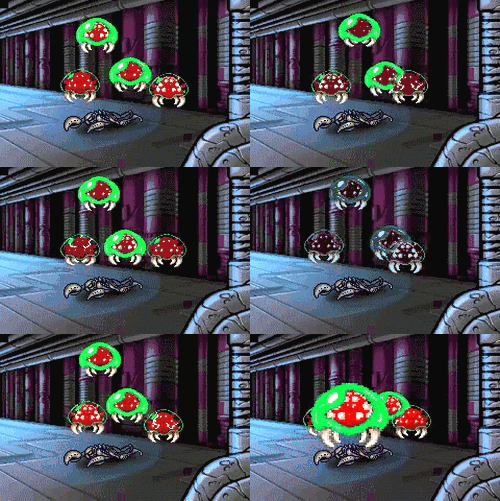
Tourian goes from the weakest area in the original Metroid to one of Aught Mission's best. The level builds a heart-pounding sense of tension that follows you straight to the last boss. Tourian has a darker color palette that clashes with Zebes' vibrancy. All-natural life is replaced with harsh technology. The room leading to Mother Brain is tinted in a soft, ominous blue that channels Space Station Ceres from Super Metroid. Space Pirate corpses litter the ground as Metroids rush at you out of the groundwork — giving you mere moments to process their incoming assault. Nothing Mission'south Tourian captures a level of horror comparable to Fusion.
Two extra areas round out M1'southward recreated Zebes: Crateria, which returns from Super, and Chozodia, an entirely new setting with lore implications. The planet's surface, Crateria is not as elaborate or expansive as information technology was in SM, but helps add some connective tissue to M1's map. Brinstar, Norfair, and Chozodia all take paths connected to Crateria, giving level design an near essential hub that makes backtracking feel natural. Crateria too looks healthier than information technology did in Super. Clear skies, glowing mushrooms, and zero to fight assert safety on Zebes' surface.
Chozodia is home to the best-preserved temples on Zebes and shows off Chozo culture's spiritual side. Hieroglyphics, beautiful murals, and statues congenital in their epitome draw the Chozo every bit an creative culture of warriors. Fusion's dissimilar ending screens showed off Samus' backstory — from Ridley killing her parents to the Chozo adopted her. Cypher Mission is the first fourth dimension a Metroid game explicitly acknowledges Samus' connexion to the Chozo through the story. She was trained in Chozodia, and the level design reflects an obstacle form of sorts. You lot demand nigh upgrades to explore the area. Chozodia besides stands out as i of the safest settings in Zebes, showing how Samus could have perhaps grown up in such an aggressive surround. From hostile planets to an abased spaceship and now holy ground, Chozodia is i of Metroid'southward about unique levels.

Chozo Statues have been a Metroid staple since the very beginning, but Zero Mission makes them a regular part of the level design. While Samus even so gets her upgrades from Chozo Statues, a few lesser statues are scattered throughout Zebes to help you on your quest. These statues fully restore Samus' wellness and ammunition, fill in your area map, and direct you towards your next upgrade. They are essentially a better version of Adam from Fusion. Chozo Statues never talk, they give you a chore, and a few tin can be outright ignored if y'all don't want direction.
Information technology'due south worth discussing how Chozo Statues add a layer of linearity to Naught Mission's game pattern. The original Metroid was open-ended to the indicate of being alienating. This lends the game a uniquely oppressive atmosphere just makes information technology challenging (if not stressful) to actually complete. Between repeated room patterns and looping layouts, M1 will have you lot running in circles. Zero Mission's map design is faithful enough to the original Metroid, where Chozo Statues are necessary to keep gameplay's stride moving. Super'south map is intricately woven together where players are beingness directed even if they never realize information technology. Zero Mission'south it not, at least not on the same scale. Chozo Statues are a compromise to ensure yous never experience stuck — considering otherwise, you would.

Zero Mission'due south linearity is likewise something of an illusion. Chozo Statues show you your side by side intended upgrade, but yous rarely need to commit to waypoints like in Fusion. While not on the same scale as Super, ZM lets yous pull off a off-white chip of sequence breaking. Skilled Bomb Jumping tin can get Samus the Varia Suit extremely early. Careful Shinespark chaining in Norfair fauna forces a path to the Screw Attack long before you should take it. The Long Beam can be skipped, the Moving ridge Axle tin can be unlocked earlier the Ice Beam (or simply ignored), and you can fifty-fifty find Super Missiles early past Ballsparking — an advanced class of Shinesparking that involves the Morph Ball.
Tweaking Fusion'due south gameplay engine to allow for more flexibility makes Nil Mission one of the nigh mechanically rewarding games in the series. Unmarried Wall Jumping is dorsum, no longer locking Samus in a single direction. Morph Bombs are faster than ever, and you tin can chain them into a near-infinite jump with the correct rhythm. The Ability Grip that let Samus hang onto ledges in Fusion is now an upgrade instead of an inherent function of her kit. This injects an added sense of progression to vertical platforming while keeping one of Fusion's improve quality of life features intact. The Speed Booster even so breaks into a Shinespark automatically on account of the no Dash button, admitting with some refinements. Not only are Shinespark puzzles but more than sophisticated, merely Ballsparking via the Morph Ball'southward leap mechanic also lets you crash through tight spaces.
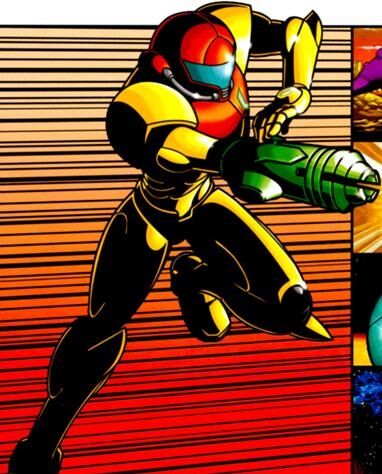
Samus' actions are snappy, enemy patterns are erratic, and her tool kit is advisedly tailored to counter everything ZM plans on throwing at you. Metroid one's ho-hum, floaty controls are replaced with responsive deportment you tin can make on the fly. Jumping is fast, shooting is faster, and the level design balances an equal mix of classic platforming with straight combat. All three original Beams — Long, Water ice, and Wave — return, merely they actually stack this time. Not simply that, the Charge and Plasma Beams are included every bit early- and belatedly-game upgrades, respectively.
Missiles no longer upgrade as they did in Fusion, with Super's equipment menu making a improvement. Where it was slightly clunky in Super, Aught Mission's equipment bill of fare benefits from some serious streamlining. You press Select to swap between Missiles and Super Missiles, and so you just hold downward R to equip them. Just needing to swap between two weapons instead of 5 mitigates the menu's worst qualities. Power Bombs besides testify upward every bit an upgrade earlier the final dominate, giving you one last tool to play with at the eleventh hour.
A unique fashion Zero Mission builds tension through gameplay is by including 3 "Unknown Items" as upgrades. These are really the Plasma Beam, Space Jump, and Gravity Suit — all of which are obtained relatively early into the game but cannot actually be used until the terminal level. Unknown Items permit y'all to pause Chozo Blocks that serve as ZM's main form of gating progression. These Blocks are almost ever added to make new rooms, ensuring that the original Metroid's level design is not needlessly tampered with.
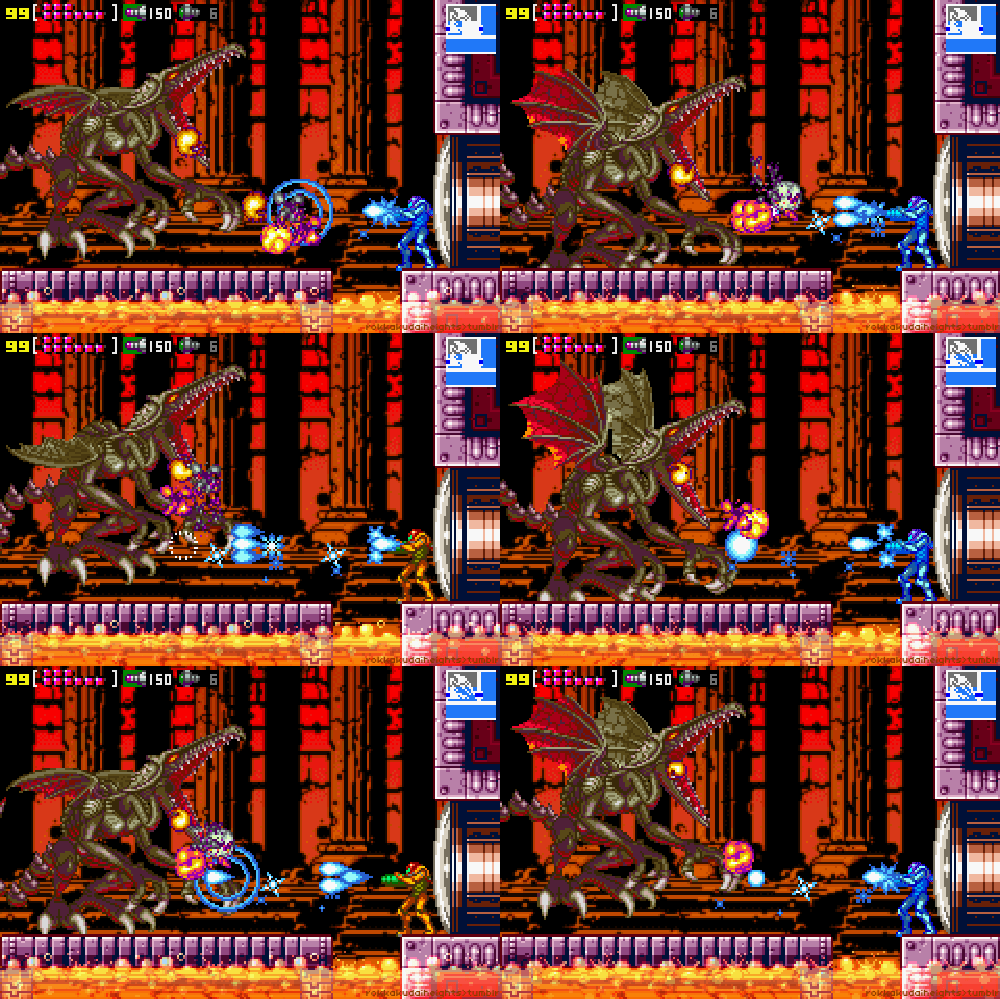
Bosses are a constant highlight that juggles a mix of pure spectacle and clever patterns to overcome. Kraid and Ridley are both on the easier side, but their frantic battles keep them exciting while draining your resources. The Mua Acid Worm and ensnared Kiru Giru make clever employ of their boss arenas to proceed you on your toes. The Mua requires you to bait it and and then escape impairment with a Zipline before firing back. Kiru Giru demands that you lot either freeze the arena's sole Ripper into a platform so you tin can reach the boss' weak point or carefully Wall Jump if you skipped the Ice Axle. Bosses tin can even exist fought in just virtually whatever club.
Best of all, Zero Mission is fully polished when information technology comes to quality of life. Chozo Statue offers enough guidance without being restrictive — especially for a handheld game. Zebetite Doors at present only require a single Missile to break instead of 5. The map has been updated to show you lot everything you could peradventure want to run across without going overboard and directing you. ZM's map shows different doors, how rooms connect, which upgrades you already picked up, color codes hot rooms in orange, and labels Chozo Statues. More important than anything, though, you can finally swap betwixt different area maps in the menu to see how everything connects. This makes planning long-term routes convenient, letting yous know which areas yous demand to explore while halfway across Zebes.
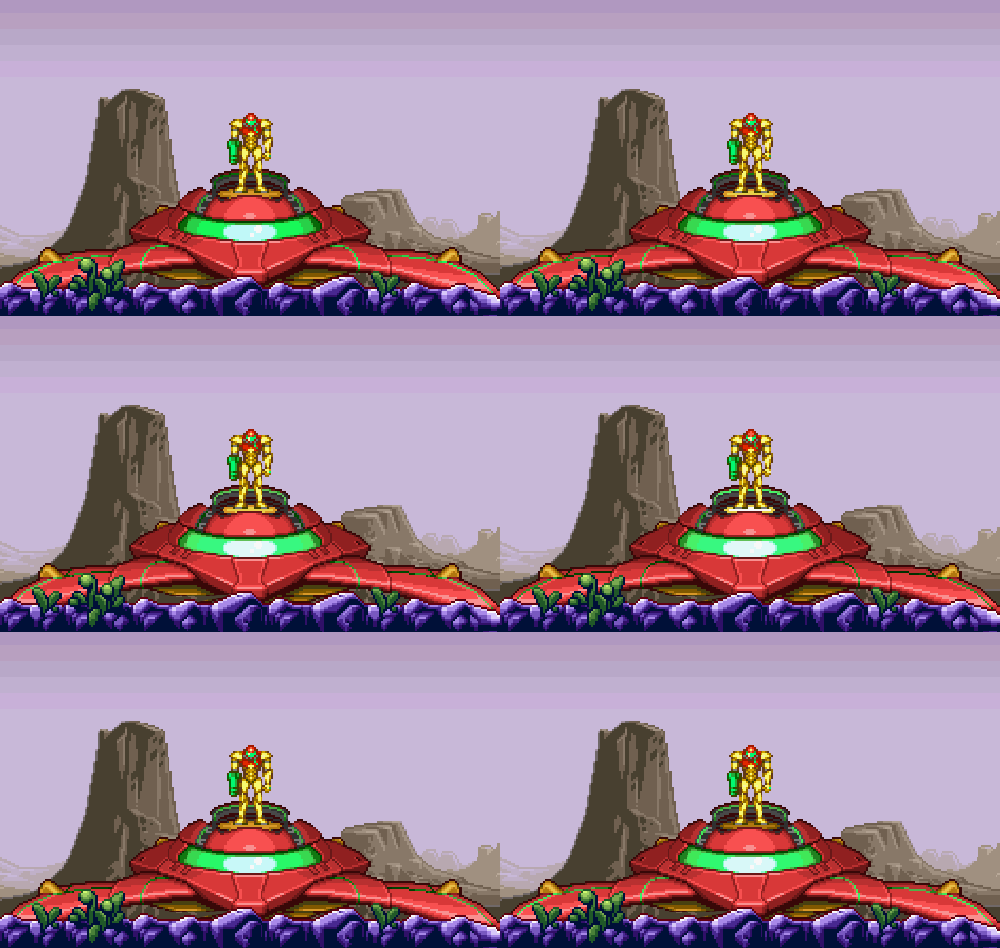
As far as presentation goes, Zippo Mission is one of the best looking and sounding titles on the Game Boy Advance — which is proverb something considering Fusion was no slouch in that section. Intimately detailed sprite work only heightens immersion. Every area has its own form of unique plant life. Parasites are royal little pixels at the end of the twenty-four hour period, only y'all can run into the green of their body nether their shell. Samus has never looked better in 2d. Her Ability Adjust is detailed to the indicate where you tin encounter the insignia glowing on her chest and all the joints in her armor. Bosses await positively stunning and are incredibly animated. Kraid is a larger-than-life giant whose shockingly fluid movements belfry in a higher place anything seen in Super Metroid. From the flora to the fauna, Zebes is live.
One of the biggest means Nil Mission differentiates itself from Super Metroid is through music. Series composers Kenji Yamamoto and Minako Hamano team up yet once more following their collaboration on Super. SM'southward soundtrack mainly leaned into Zebes' atmospheric qualities — edifice emotion through somber and passive tracks. Super has its share of energetic music, only they are non the norm. Null Mission is the complete contrary. Most of the soundtrack is bombastic and action-packed. Rather than being derivative of their work on Super, Yamamoto and Hamano's score plays to the sense of heroic chance virtually all Nintendo games carried in the late 80s. Atmospheric songs are nevertheless present simply now take a backseat to toe-tappingly tricky music.
Pivoting from Fusion'due south heavy emphasis on narrative, Zero Mission features adjacent to no text. The title reel clarifies your mission to defeat Mother Encephalon, but there is zero dialogue beyond two short monologues from Samus near the start and end of the game, respectively. Samus specifically frames ZM as a reflection of her first mission, which is only enough to be compelling while lending a personal flair to a title that previously had little in the mode of plot. In this respect, Zero Mission continues Fusion's tendency of fleshing out Samus as a character. The key difference being that cutscenes here follow a strict "show, don't tell" philosophy.
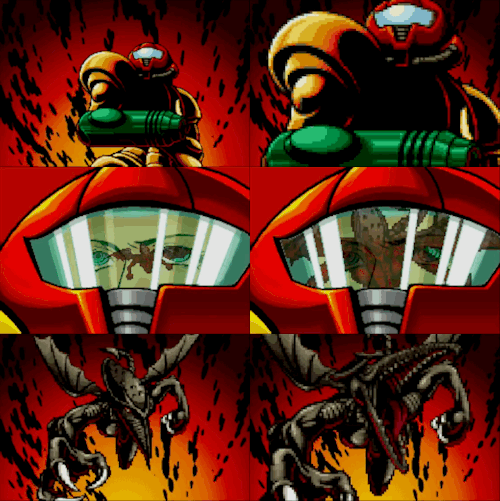
Samus' opening monologue reveals that she really grew up on Zebes, which recontextualizes the entire mission. Zebes is no longer a totally conflicting planet to Samus, but her once abode was invaded past Space Pirates. In-game cutscenes exist solely to build tension or offering context. Female parent Brain watches Samus the first fourth dimension she descends an lift, setting up the final confrontation. Ridley is not really on Zebes at the outset of the story merely arrives with his Pirates later Kraid is killed. Entering Kraid's dominate room triggers a short scene where he looms over Samus and roars with fury. Information technology's a squeamish modify of pace after Fusion and helps keep gameplay introspective in spite of how action-packed Zebes has become.
The macerated script helps put Metroid'due south focus back on environmental storytelling, which serves Zebes as a setting better than Samus and Adam'southward routine on BSL would. Zero Mission shows yous Zebes not only as it was, just how Samus herself remembers it. The planet is then alive because this was her earliest mission as a bounty hunter. She has her whole time to come alee of her, which was true for Metroid when the NES original was released in 1986. The planet looks cleaner, still years abroad from whatever cataclysms wear it downwardly by Super. All the dissimilar glimpses of Chozo culture offer insight into Samus' by and the people who used to walk on Zebes. The Chozo are still a race shrouded in mystery, but ZM offers tangible gameplay proof that they existed and crossed paths with Samus.
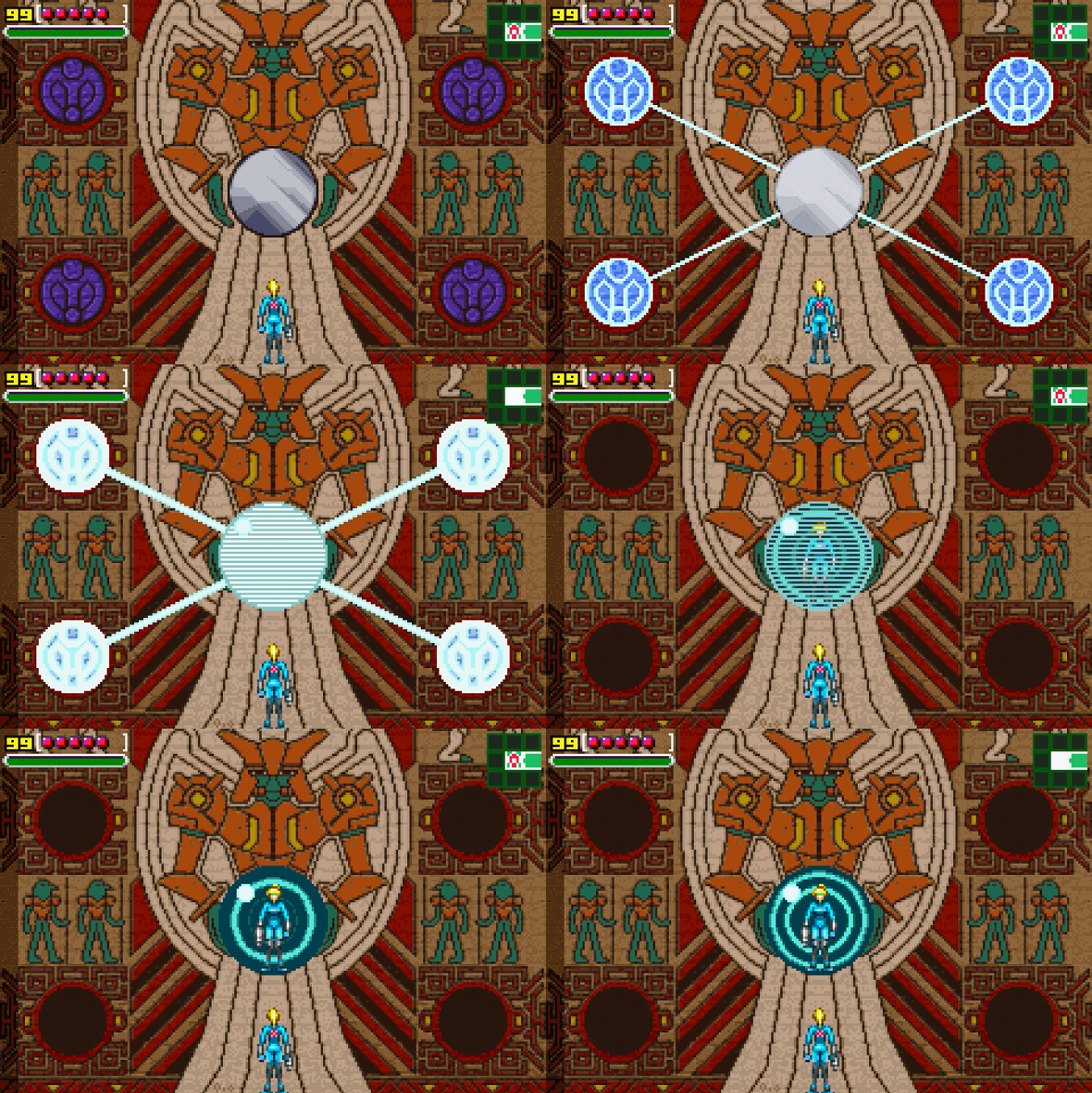
Framing Nil Mission as an account of Samus' first mission likewise allows for some discrepancies. Kraid was non a behemothic the start time Samus fought him, just a item inherited from Super. Samus specifically says in Fusion that she did not learn the Shinespark or Wall Jump until Zebesian animals taught her during the events of Super. These are both techniques Samus can pull off in ZM, turning her into an unreliable narrator without necessarily being a plot hole. Clever framing allows the developers mechanical flexibility while remaining faithful to the NES original where it counts. That said, this is likely the reason Nintendo considers the original Metroid canon over Nil Mission in the series' official timeline.
Zero Mission is an amazing remake as is, but what really pushes the game over the edge is how it expands M1's finale. Following Samus' escape from Tourian, Ridley'southward Space Pirates immediately intercept her, and she crash lands back down on Zebes without access to her Power Suit. From here, Samus is forced to stealth away from Infinite Pirates who are actively hunting her. You have a pistol that tin briefly stun the pirates when fully charged, but you have no means of killing them, and all your upgrades are gone.
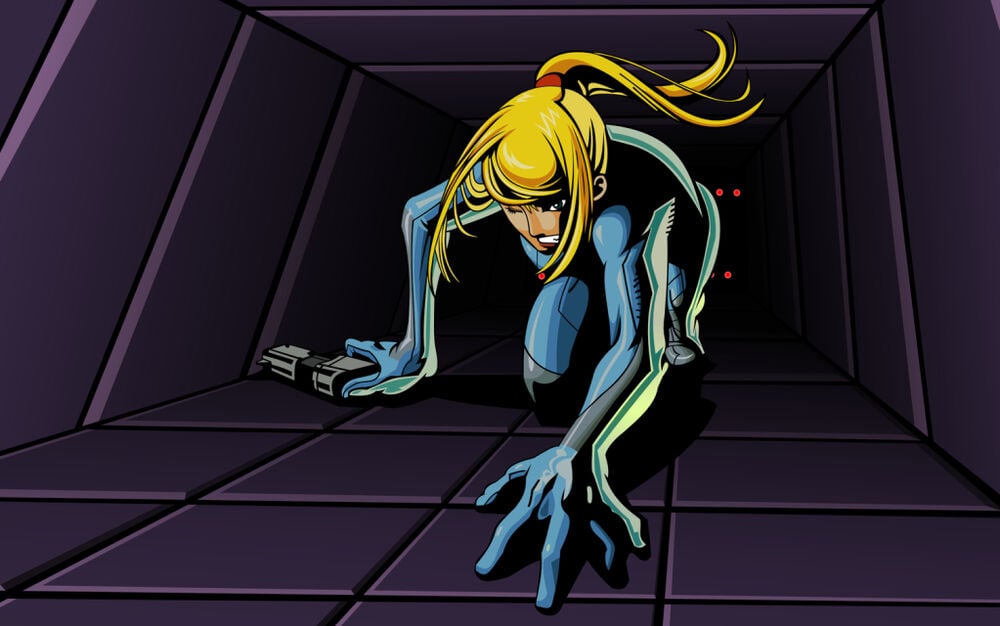
This stretch of gameplay reduces Samus downwardly to her now-iconic Cipher Suit — a skin-tight jumpsuit Samus wears under her armor. While Samus has virtually zero defense force in her Zero Suit, she can fit through tight spaces and still wall leap. This allows you some wiggle room in escaping as Space Pirates follow you from room to room. Yous either need to be fast enough to lose them, fob them into killing each other, or hide somewhere in the level design. Adumbral alcoves keep Samus hidden in plain sight, only the Chozodian ruins you find shelter in are poorly maintained, and platforms are decumbent to aging during a heated pursuit.
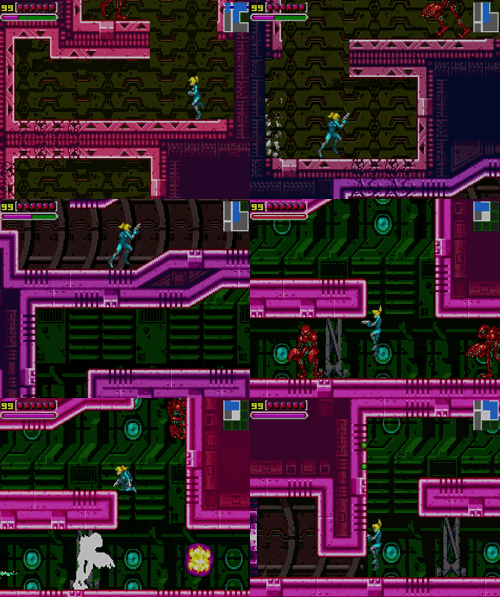
What helps sell Zero Mission'due south stealth section is that this level of in-game tension is not unprecedented for Metroid. Stealthing by the Infinite Pirates in Chozodia is just the logical evolution of Fusion'due south SA-10 mechanic — a stalker who followed Samus throughout the BSL. Where about of SA-Ten'southward encounters are scripted, the Space Pirates practice not let up until they physically lose sight of y'all. While Samus is obviously limited in gameplay, the level design offers y'all a fair amount of liberty in approaching things. Y'all tin can permit the pirates chase you caput-on, hoping to outmaneuver them along the way (a valid strategy), or you can carefully sneak by without triggering their notice. Both are fun, both are tense, and both portray Samus as nothing brusk of a bonafide badass.
It's piece of cake to take for granted only how well Cypher Mission carves out a quiet just poignant arc for Samus Aran. This is a doubly personal story because she was raised on Zebes and Ridley killed her parents. Gameplay upward to the fight against Mother Brain is Samus reclaiming her home from invaders, while everything afterward is her finding the will to fight back confronting the monsters who ripped her life abroad. Samus begins the stealth segment powerless in the face of the Space Pirates who killed her parents, but gameplay forces you to confront them and printing deeper into Chozodia. Samus cannot reclaim what she lost, simply she can overcome what hurt her.
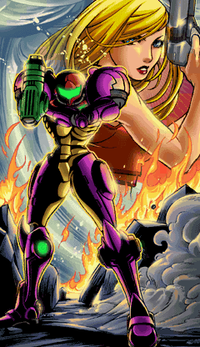
Samus has to fight her way to a ceremonial holy ground implied to be where the Chozo originally trained her. It's here where all your Unknown Items finally activate into 3 of the nigh overpowered upgrades in Metroid: the Gravity Accommodate that lets you lot tank damage while wading through water, the Space Jump that lets y'all jump continuously without stopping, and the Plasma Axle that rips through everything in its path. Ending the stealth segment by upgrading Samus threefold is a stroke of genius and stands out every bit the best employ of thespian interconnectivity in Metroid. You are forced to endure Samus' helplessness for an unabridged dungeon'south worth of level design before yous can finally fight back. At which point, the Space Pirates run away from you. This is an incredible way of conveying ability — both its absence and presence — through pure gameplay—cipher else.
Zippo Mission'due south epilogue does hateful a mechanized Ridley ends up serving equally the final boss instead of Mother Encephalon. While at that place's certainly an element of fan service to it, having Ridley act every bit the last major obstacle in Samus' inaugural mission makes sense, given what Fusion revealed. This is the pirate who killed her parents, invading her adoptive family'south home. Ridley'south presence is overdone in the greater scope of Metroid, but it makes sense to make him the last boss. He has the deepest connectedness to Samus, is legitimately threatening, and makes for a fun last battle that ends the game on a college note than Female parent Brain.
Ridley is really much stronger if you obtain 100% completion equally a means of encouraging replay value fifty-fifty more than usual, offering completionists a tangible gameplay advantage for the first time in 2D Metroid. Power Bombs beingness such a late upgrade means Zebes merely fully opens up correct earlier the last boss, assuasive proper endgame rooms to explore. Easily, the best post-game reward ZM offers is Metroid itself: a fully playable version of the NES archetype.
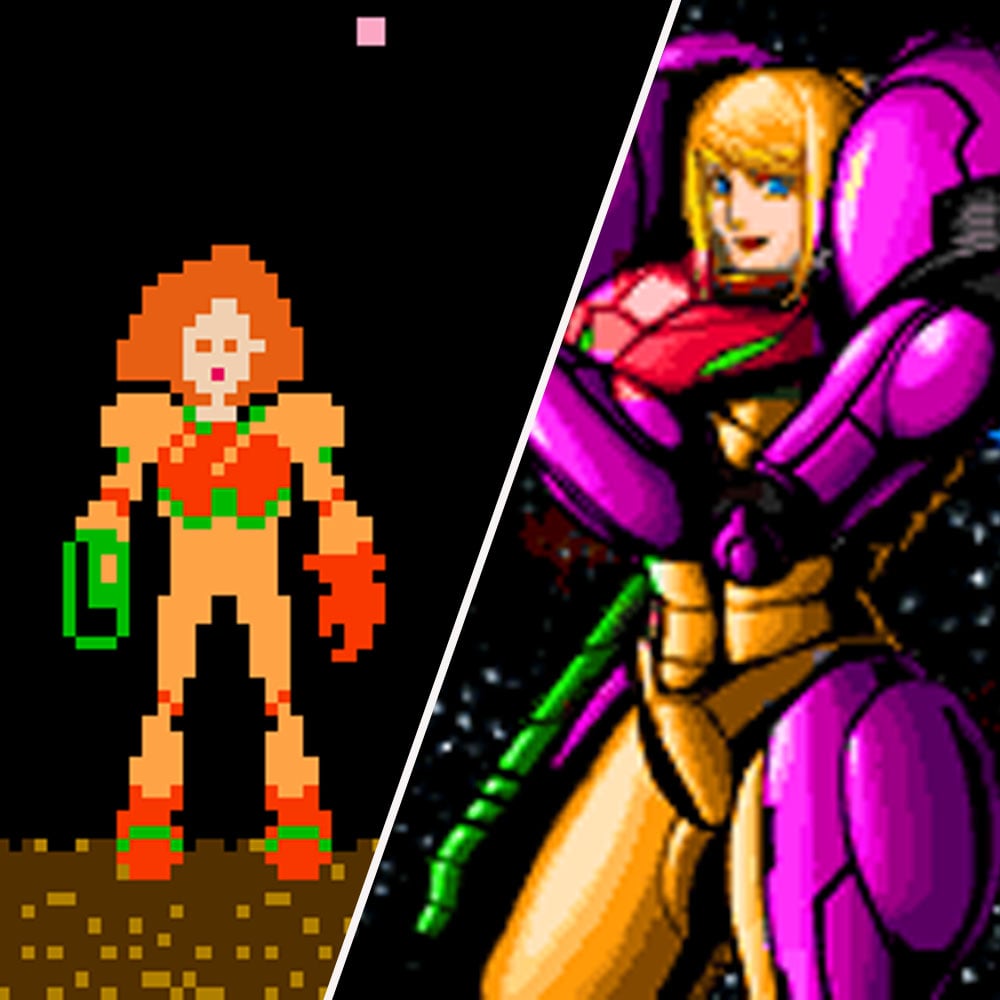
The single most important detail about Zippo Mission as a remake is that it goes out of its way to include the original Metroid for reference. Nil Mission is ultimately a companion piece; it does not want or try to replace the original. It is a celebration of the foundation that Metroid was congenital on, showing off how far the franchise has come by returning to the series' roots. Zippo Mission eases you lot in and helps you both admire and run across the original Metroid for what information technology is — primitive only not defective in quality. Metroid, just similar Naught Mission, plays to its strengths. In a sense, both games are meant to be played adjacent. Y'all trounce Nada Mission and and so start up Metroid to see only how much things have changed. They're two sides of the same coin.
Nada Mission is not concerned with only fixing Metroid, but jubilant it. Taking reward of the series' development since Super and Fusion is a grade of modernization, merely it also has the consequence of highlighting the things the original Metroid always excelled at: a fast pace, the thrill of adventure, and a one of a kind atmosphere you simply volition non detect anywhere else. Zilch Mission captures the spirit of Metroid I where it matters virtually. While this does not suddenly make the original more accessible, it does make it easier to appreciate. Improving Metroid without ever undermining it, Zero Mission is the gold standard for video game remakes.

How Is Zero Mission Different From Metroid,
Source: https://goombastomp.com/metroid-zero-mission-is-the-ideal-video-game-remake/
Posted by: lemondstran1964.blogspot.com
0 Response to "How Is Zero Mission Different From Metroid"
Post a Comment